
Sizing · Cat-first design · Buying guide
No litter box is perfect for every cat. The better promise is a range broad enough to fit different bodies, ages, mobility needs and toileting styles—and a measuring method that makes the choice clear.
The two-minute measuring method
- Wait until your cat is standing naturally and relaxed.
- Measure from the nose to the base of the tail.
- Measure from the floor to the top of the shoulders.
- For older or mobility-limited cats, estimate the lowest comfortable step-over height.
- Write the numbers down before comparing products.
Translate measurements into a box
A useful ideal is a tray about 1.5 times the cat’s body length. Compare the inside floor, not just external length. Check that a covered box gives shoulder and head clearance, and that the doorway does not force a tall cat to crouch sharply.
Factor in behaviour
- Big digger: favour higher walls and a litter-catching step.
- Standing urination: choose taller protection around the back and sides.
- Senior or arthritic cat: prioritise a low entry and accessible location.
- Nervous cat: offer a clear exit and avoid a cramped enclosure.
- Pellet-litter household: check whether a sieve system suits your cleaning workflow.
Use the range, not an absolute claim
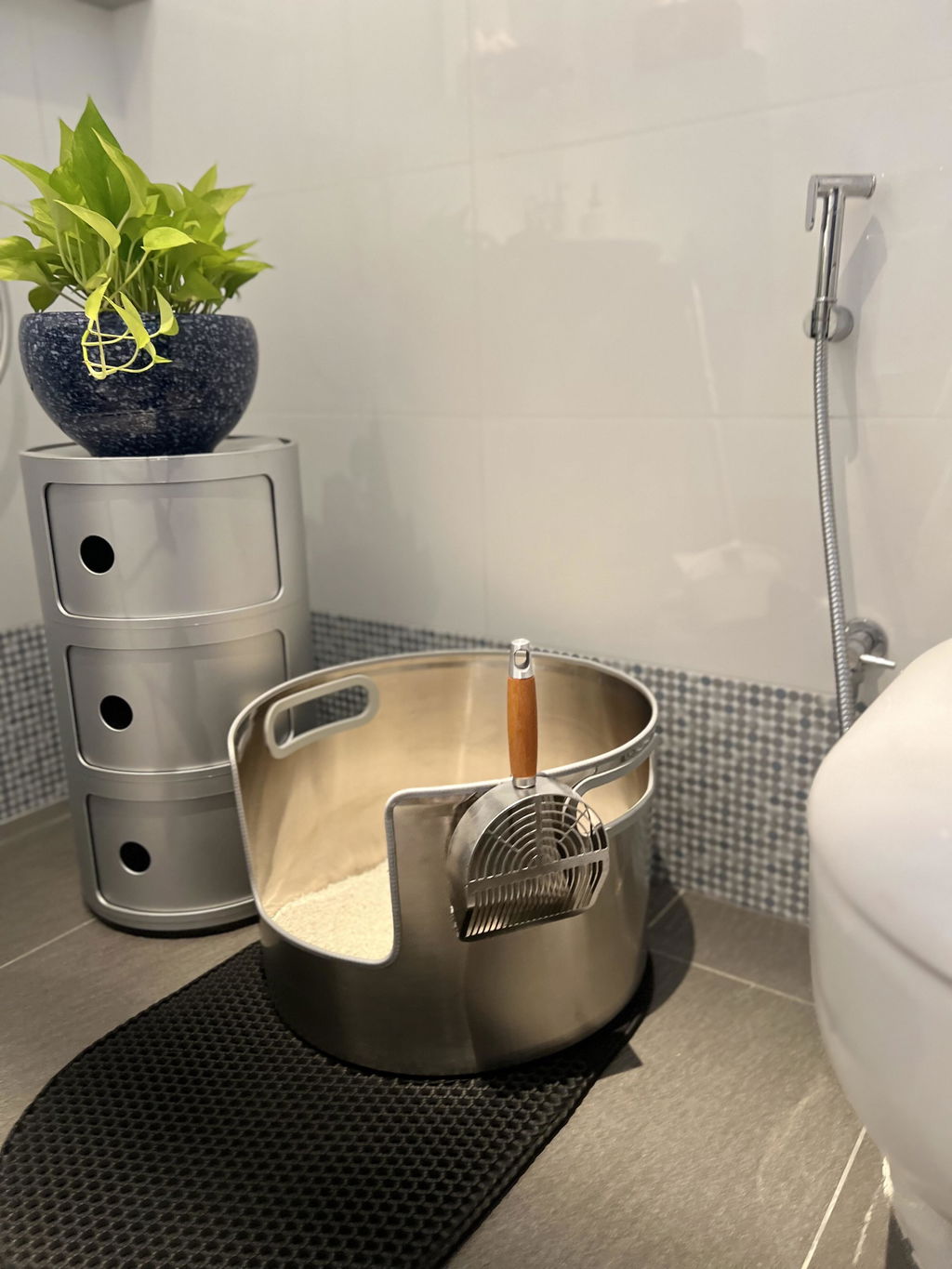
Barely There offers standard, round, XXL, enclosed, low-entry and sieve designs because cats are not interchangeable. Use our litter box quiz as a shortlist, then confirm the measurements before ordering.
Frequently asked questions
Should kittens use a smaller box?
They need an easy entry and safe footing, but they grow quickly. A roomy tray with an accessible doorway can avoid another purchase, provided the kitten can enter and exit confidently.
What if the ideal box will not fit my home?
Choose the largest practical option, keep it very clean and place it well. More than one well-positioned box may work better than one oversized box in a poor location.
If a cat begins avoiding the box or shows discomfort, rule out medical causes with a veterinarian before treating the behaviour as preference.