

Open vs enclosed · Cat preference · Setup
There is no universal winner in the open-versus-enclosed debate. The right box is the one your cat can use comfortably, consistently and without feeling trapped—and the one you can keep genuinely clean.
What open boxes do well
- More usable space: no roof to limit a tall cat’s posture.
- Clear exits: helpful in multi-cat homes where another cat may approach.
- Easy monitoring: changes in urine clumps or stool are easier to notice.
- Simpler cleaning: every surface is immediately accessible.
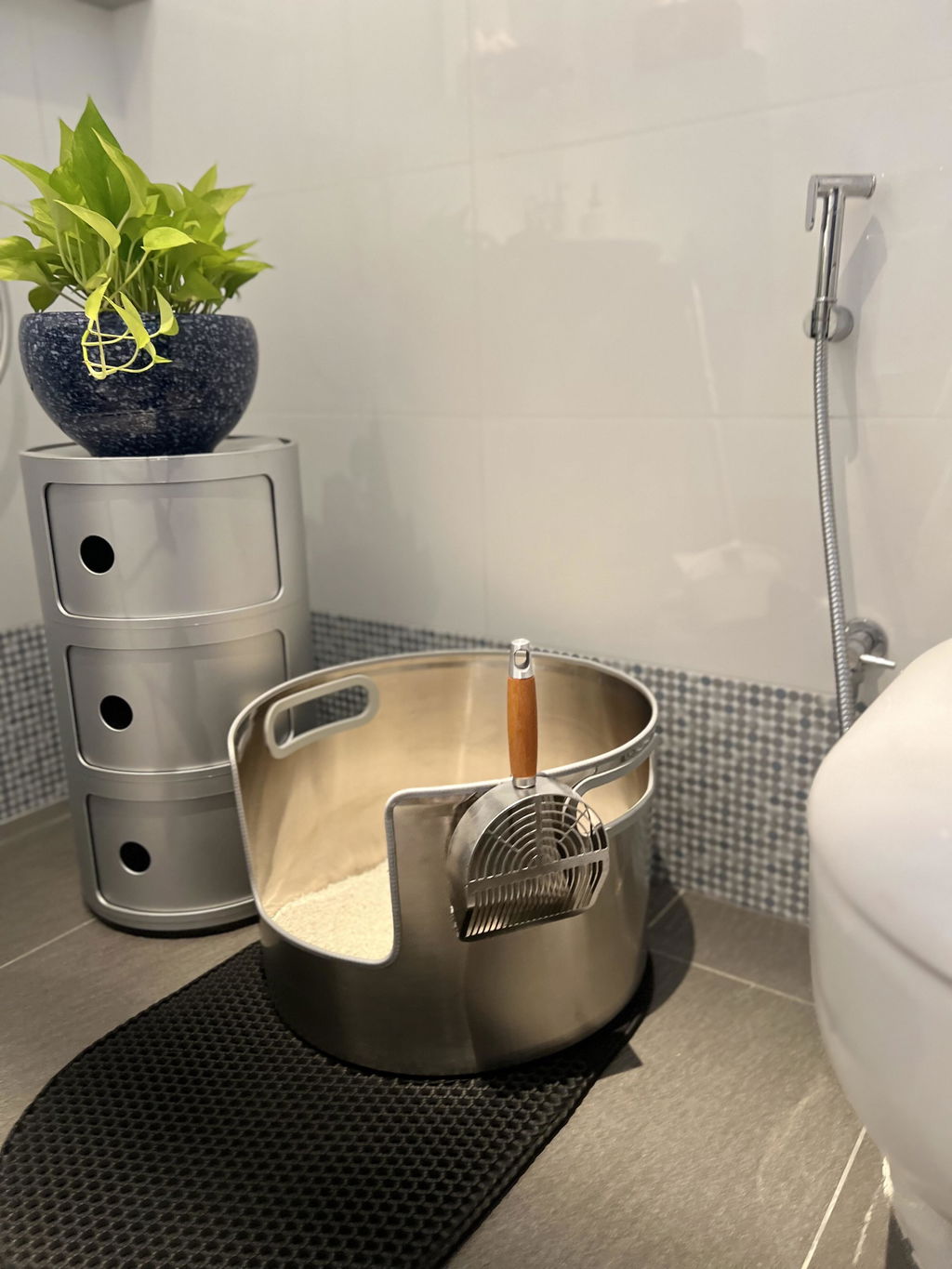
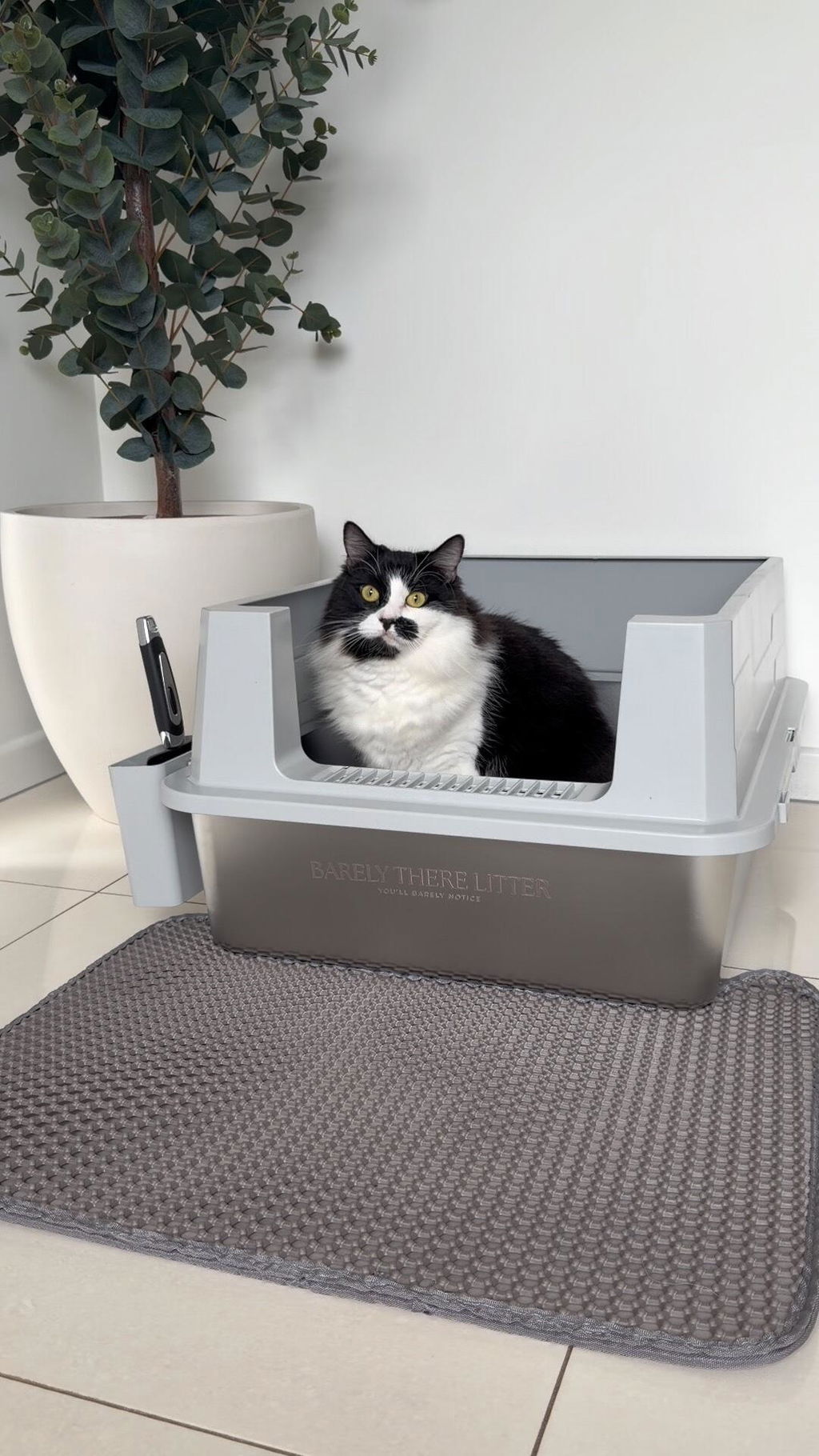
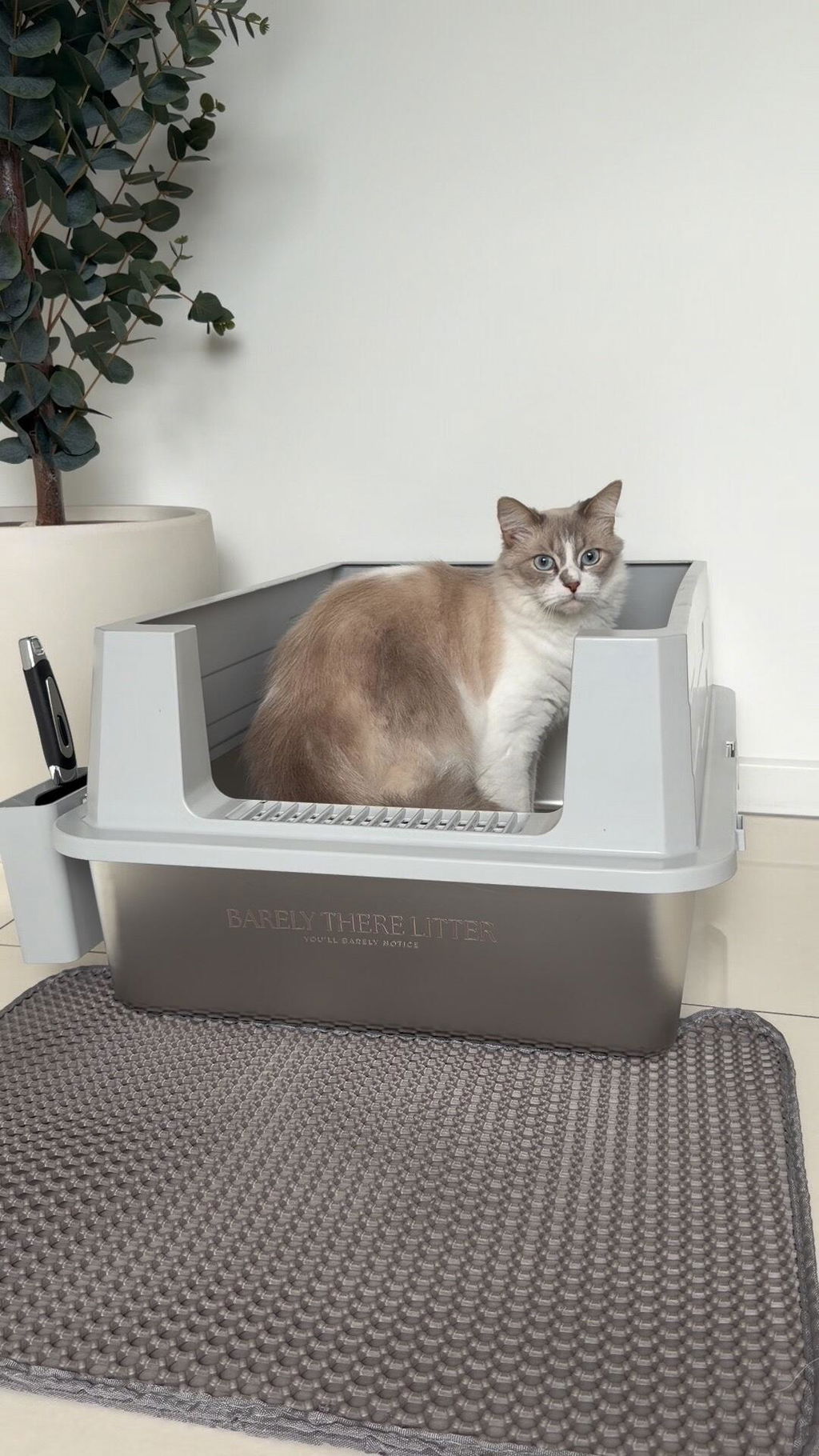
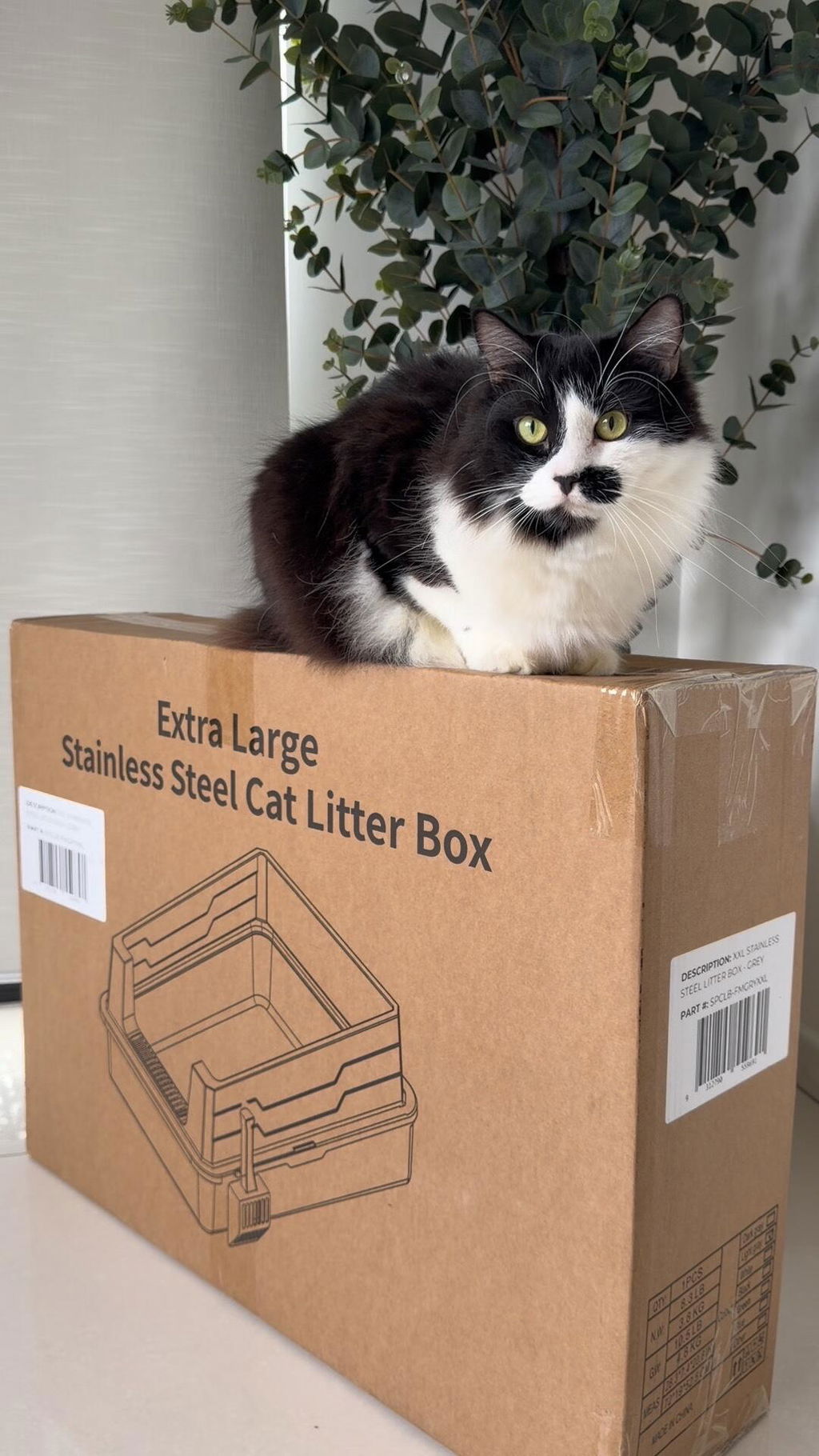
The trade-off is less containment. A high-wall open tray or stainless steel litter box with a removable surround can reduce scatter while keeping the top open.
When an enclosed box can work
An enclosed design may suit a cat that already chooses covered spaces and a household that needs more scatter control. It must still be roomy, well ventilated and easy to dismantle for cleaning. Remove a swinging flap if your cat avoids it, and never use the lid as a substitute for daily scooping.
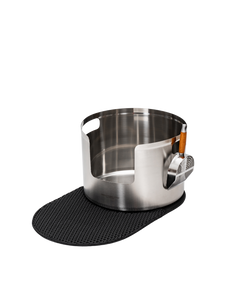
Our enclosed stainless steel litter box pairs a steel tray with a roomy cover and replaceable carbon filter. Check the internal dimensions against your cat before choosing it.
Let your cat answer the question
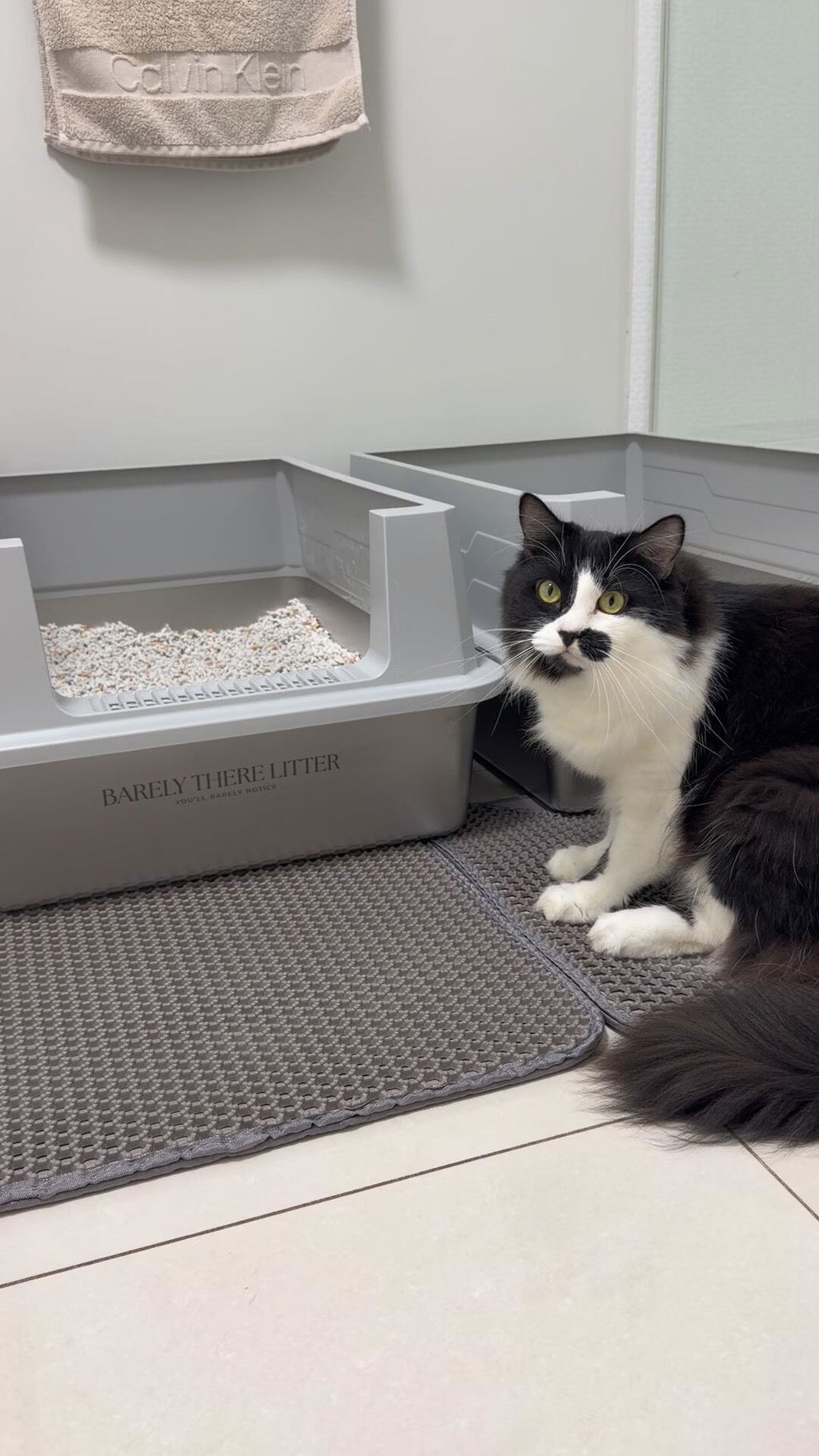
If you are unsure, offer both styles in separate locations using the same familiar litter. Keep both equally clean and observe which your cat chooses over one to two weeks. Avoid forcing a nervous cat into an enclosure or moving the only tray abruptly.
Red flags are not a design preference
Straining, frequent trips, crying, blood, very small urine clumps or sudden avoidance need prompt veterinary attention. A clearer view of an open tray can help you notice changes, but a litter box does not diagnose or prevent urinary disease.
Frequently asked questions
Do enclosed litter boxes control odour better?
They may contain odour briefly, but they can also concentrate it inside. Daily scooping, the litter you use and a clean, non-absorbent tray have a larger practical effect.
Are open boxes too messy?
Not necessarily. Choose a larger footprint, high walls or a paw-cleaner step, and place a litter-catching mat at the exit.
General information only. Seek veterinary advice for any sudden change in urination, defecation or litter-box use.