

Cat health · Stool changes · Vet red flags
Your cat’s stool is one useful health signal, but it is not a diagnosis. The most meaningful clue is a change from your cat’s normal pattern—especially when it appears with pain, vomiting, appetite loss or lethargy.
What normal often looks like
There is natural variation with diet and individual cats. In general, look for formed segments that hold shape, are not rock hard and do not leave a watery puddle. Frequency matters less than consistency and comfort: know what is normal for your cat.
Common changes to notice
- Soft or watery: may follow a diet change or stress, but can also reflect infection, parasites or disease.
- Hard, dry or difficult to pass: may indicate constipation or dehydration.
- Red blood or mucus: can come from lower bowel irritation and needs veterinary advice if more than a tiny one-off streak.
- Black and tarry: can indicate digested blood and is urgent.
- Very pale or grey: warrants veterinary assessment.
Look at the whole cat
Record appetite, drinking, vomiting, energy, weight and toileting behaviour. A photo and a fresh stool sample in a clean container may help your veterinarian; call the clinic first for storage instructions.
Make monitoring easier
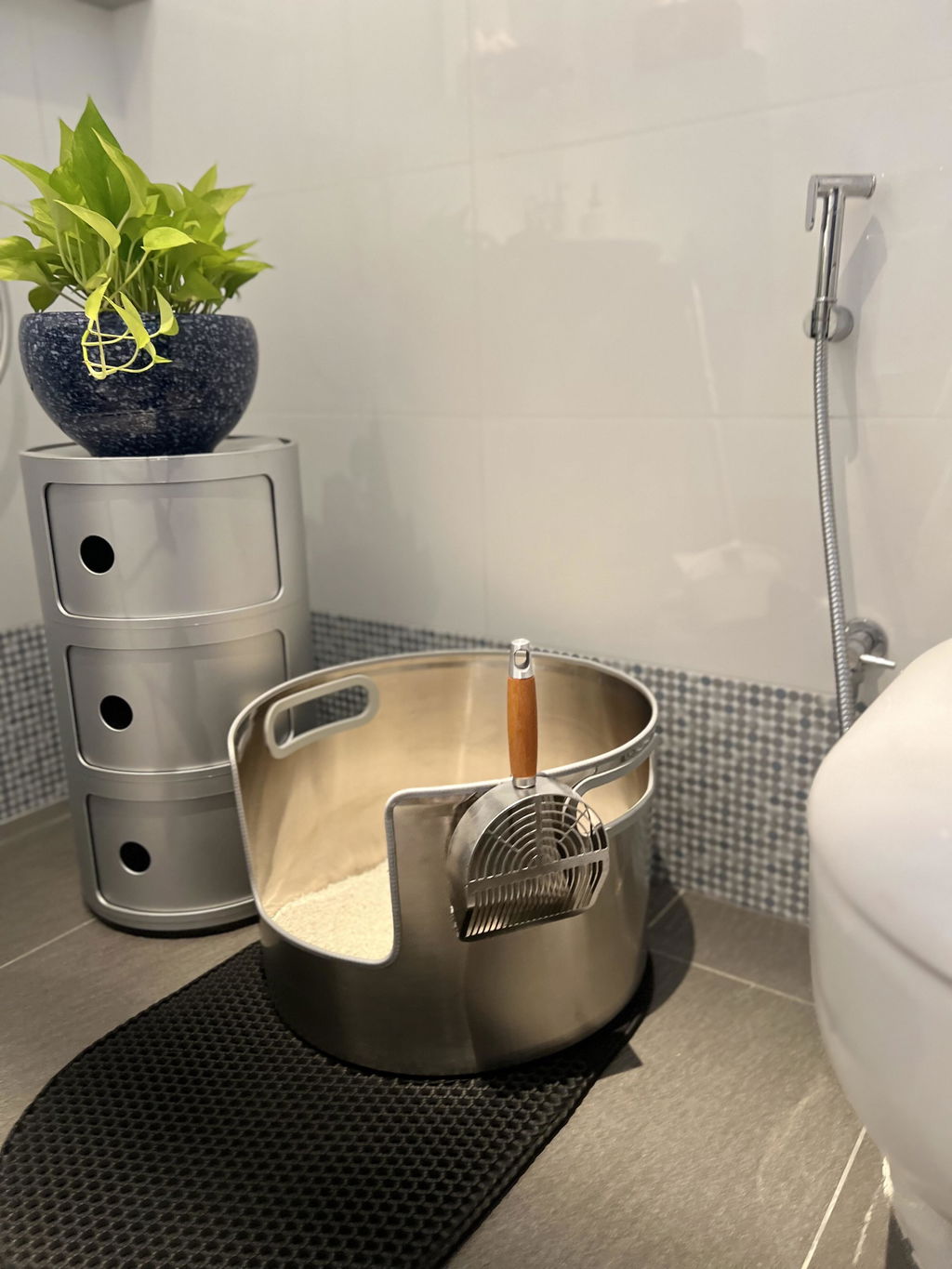
Scoop at least daily and avoid burying the tray under excessive litter. An open, easy-to-clean box gives a clear view of changes. Stainless steel helps with cleaning, but it does not prevent gastrointestinal illness.
When to seek care
Contact your vet promptly if diarrhoea lasts more than a day or two, and sooner when there is blood, vomiting, poor appetite, lethargy, pain, dehydration, repeated straining or a very young, old or medically vulnerable cat.
Frequently asked questions
Can a new food change my cat’s poo?
Yes. Sudden diet changes can cause short-term digestive upset. Transition gradually unless a veterinarian directs otherwise, and seek advice if signs persist or your cat is unwell.
Should I give human anti-diarrhoea medicine?
No, not without veterinary direction. Some human medicines are unsafe for cats and can delay the right diagnosis.
This guide cannot diagnose a stool change. Contact your veterinarian for persistent, severe or concerning signs.