

Manual vs automatic · Costs · Cat comfort
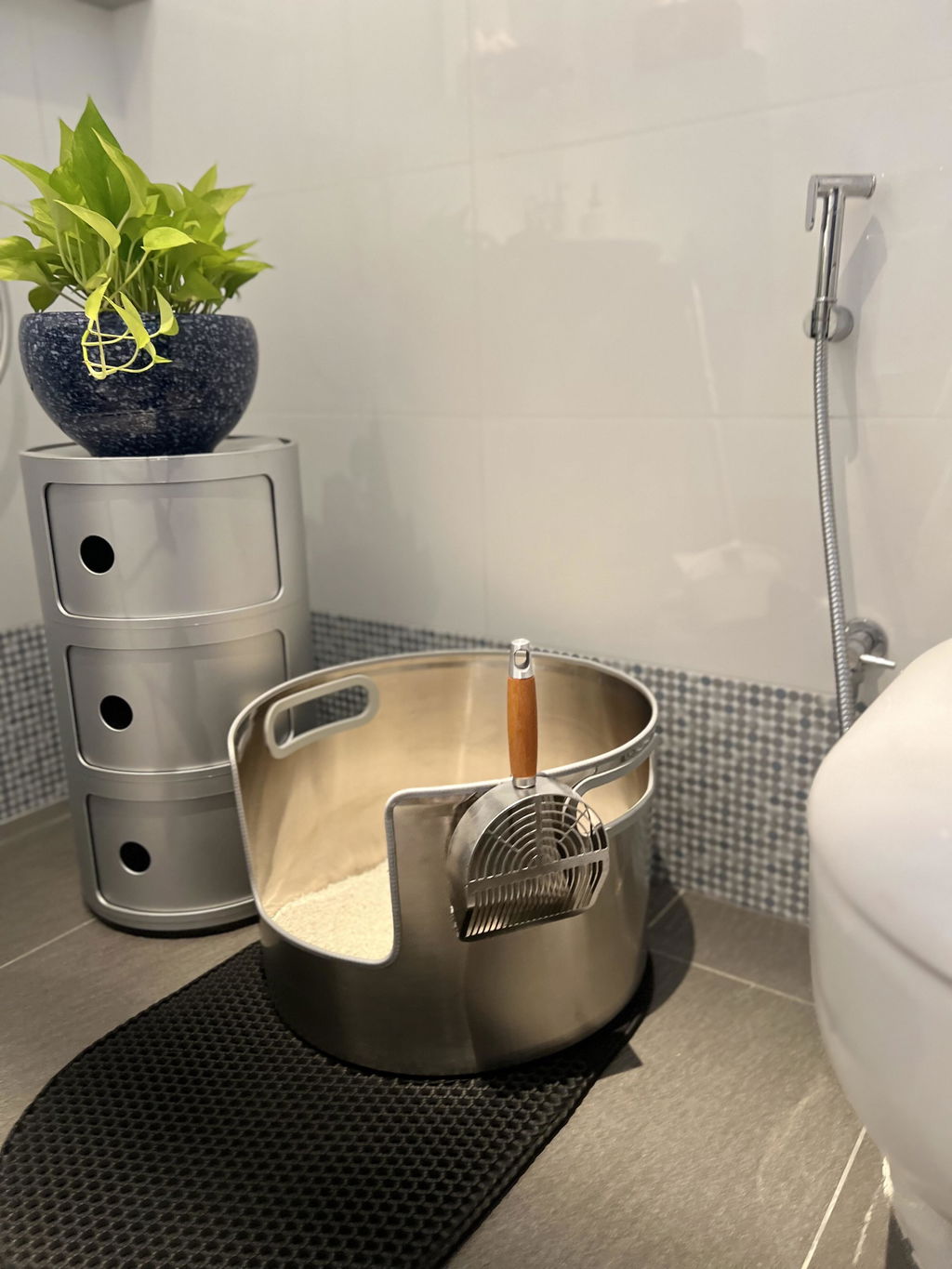
A self-cleaning litter box reduces some daily scooping; a stainless steel tray keeps the system simple. The better choice depends on whether your priority is automation, visibility, quiet, cleanability or purchase cost.
Compare ownership, not just the product
| Consideration | Stainless steel | Self-cleaning |
|---|---|---|
| Routine | Scoop by hand | Automates waste removal |
| Deep cleaning | Few simple parts | More components to dismantle |
| Monitoring | Waste is easy to see | App data varies; waste may be hidden |
| Noise and motion | Silent | Varies by model and cycle |
Think about your cat’s tolerance
Some cats adapt quickly to moving mechanisms; others dislike noise, enclosed drums or a shifting floor. Never remove the familiar tray on day one. Offer the new box beside it, keep both clean and allow a gradual choice.
Budget for the full lifespan
For an automatic unit, include replacement liners, filters, compatible litter, electricity and potential repairs. For a manual tray, include your time and a scoop. Stainless steel usually has a higher upfront price than basic plastic but far less mechanical complexity than an automatic box.
A clean box still needs a person
Automation does not eliminate checks. Inspect waste, top up litter, clean sensors and wash the unit on schedule. With a manual stainless steel litter box, scoop at least daily and use that moment to notice changes in your cat’s habits.
Frequently asked questions
Do self-cleaning boxes save time?
They can reduce scooping, but not refilling, deep cleaning, troubleshooting or monitoring. The real saving depends on the model and your cat’s acceptance.
Which option is best for multiple cats?
Check the manufacturer’s capacity for an automatic unit. Whatever the format, separate boxes in different locations help reduce competition and create a backup if one box is unavailable.
Sudden changes in frequency, straining, crying, blood or litter-box avoidance require veterinary advice; an app or automatic cycle is not a diagnosis.