
Kitten health · Digestion · Vet red flags
Kittens have small bodies and can lose fluid quickly, so stool changes deserve closer attention than they might in a healthy adult. The aim is not to diagnose from the tray; it is to notice change early and know when to call.
What normal can look like
Frequency varies with age, food and the individual kitten. Focus on a consistent pattern, comfortable passing and stool that holds shape without being dry or pellet-like. Newly weaned or recently adopted kittens may change temporarily as food and stress levels shift.
Common changes and possible causes
- Soft or watery stool: diet change, stress, infection or parasites are among many possibilities.
- Hard, dry stool or straining: may reflect constipation, dehydration or pain.
- Mucus or fresh red blood: can occur with lower bowel irritation and needs advice if repeated or more than a tiny trace.
- Black, tarry stool: may indicate digested blood and needs urgent care.
- Visible worms or rice-like segments: contact your vet for identification and treatment.
Diet changes should be gradual
Continue the kitten’s familiar complete-and-balanced food at first. Unless your veterinarian advises a faster change, transition over several days. Avoid milk, rich table food and abrupt switches. A kitten that refuses food needs veterinary advice rather than a wait-and-see approach.
How to monitor without obsessing
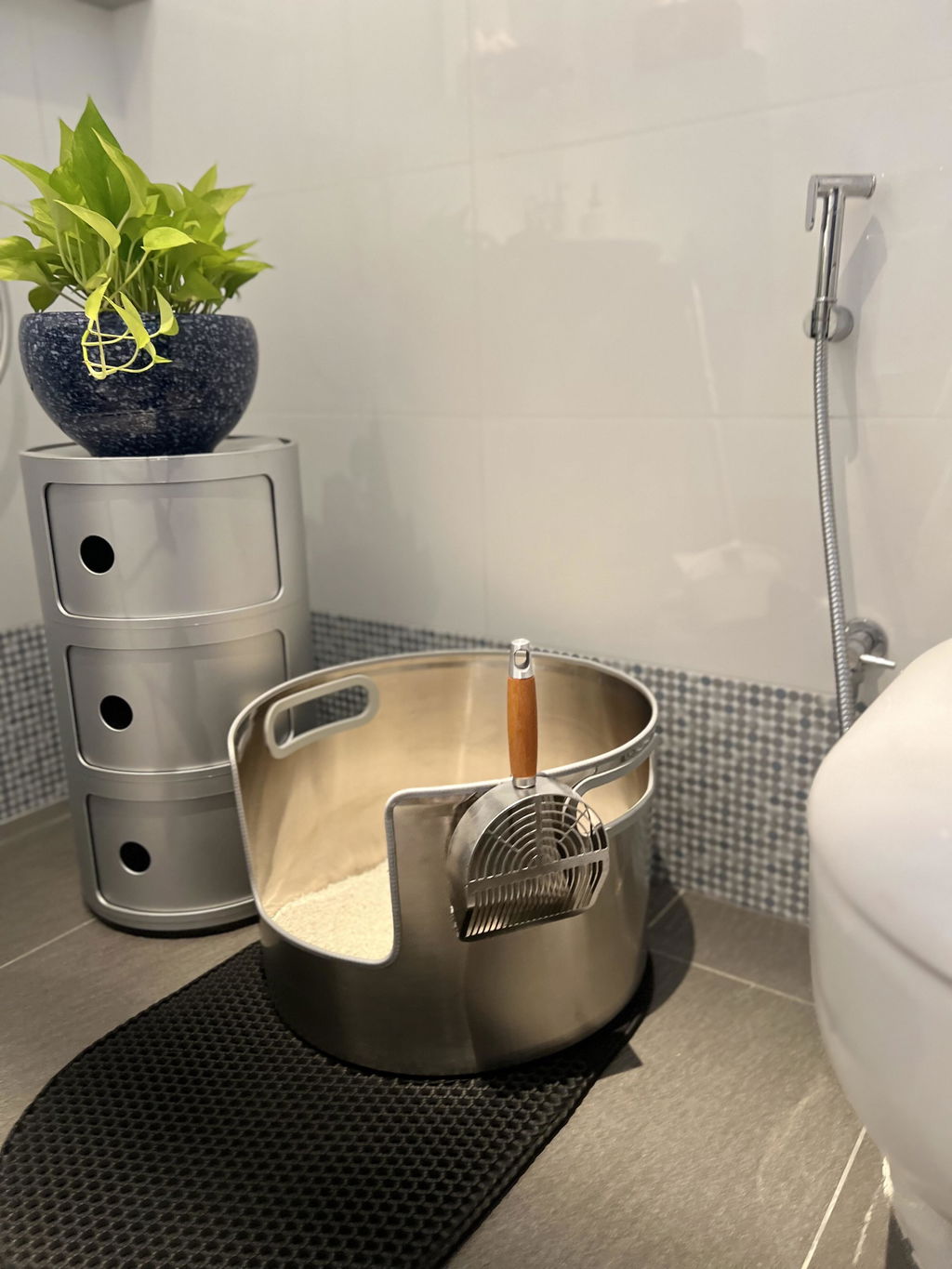
Scoop at least daily and note consistency, colour, frequency and effort. Photograph a concerning stool and ask the clinic whether to bring a fresh sample. An open, easy-clean box makes observation straightforward; the tray itself does not prevent digestive disease.
When to call
Contact your vet for diarrhoea lasting more than a day, and sooner for very young kittens or any blood, vomiting, weakness, dehydration, pain, bloating, poor appetite or repeated straining. Follow urgent-care advice from your local clinic.
Frequently asked questions
How often should a kitten poo?
There is no single correct number. Age, feeding frequency and diet matter. A sudden change from your kitten’s pattern or obvious discomfort is more important than matching a chart.
Can I treat kitten diarrhoea at home?
Do not give human medicine. Call your vet for advice, especially for a young kitten, because dehydration and some infections can become serious quickly.
General information only. This article cannot diagnose diarrhoea, constipation, parasites or bleeding in a kitten.