

Litter guide · Materials · Cat preference
The “best” cat litter is the one your cat accepts and your household can maintain. Every material trades off tracking, dust, clumping, odour control, weight, cost and disposal.
Quick comparison
| Type | Strengths | Trade-offs | Workflow |
|---|---|---|---|
| Clumping clay | Firm clumps, familiar texture | Heavy; dust/tracking vary | Scoop clumps daily |
| Tofu/plant-based | Light, often clumping | Cost; performance varies | Scoop clumps daily |
| Paper | Low dust, soft pellets | Less clumping/odour control | Remove wet areas; refresh |
| Wood pellets | Low tracking, economical | Texture change; sawdust | Works well with a sieve |
| Crystal/silica | Light, absorbs moisture | Texture, cost and disposal | Stir/remove solids; replace |
Clumping clay
Clumping clay is widely available and makes urine removal obvious. Quality varies: some formulas are dusty or track heavily, while others form firmer clumps. It is heavy to carry and is generally disposed of in household waste rather than compost.
Tofu, corn, wheat and other plant-based litters
Plant-based litters can be light and absorbent, with clumping performance that ranges from excellent to fragile. Keep bags dry and follow the maker’s disposal instructions. “Flushable” marketing does not override local plumbing, water or council rules—bin disposal is the safer default unless authorities say otherwise.
Paper litter
Paper pellets are low dust and often chosen after surgery or for cats with sensitive paws, under veterinary guidance. They typically do not form the same hard clumps as clay, so the cleaning rhythm may involve removing wet patches and replacing more of the tray.
Wood pellets and sieve systems
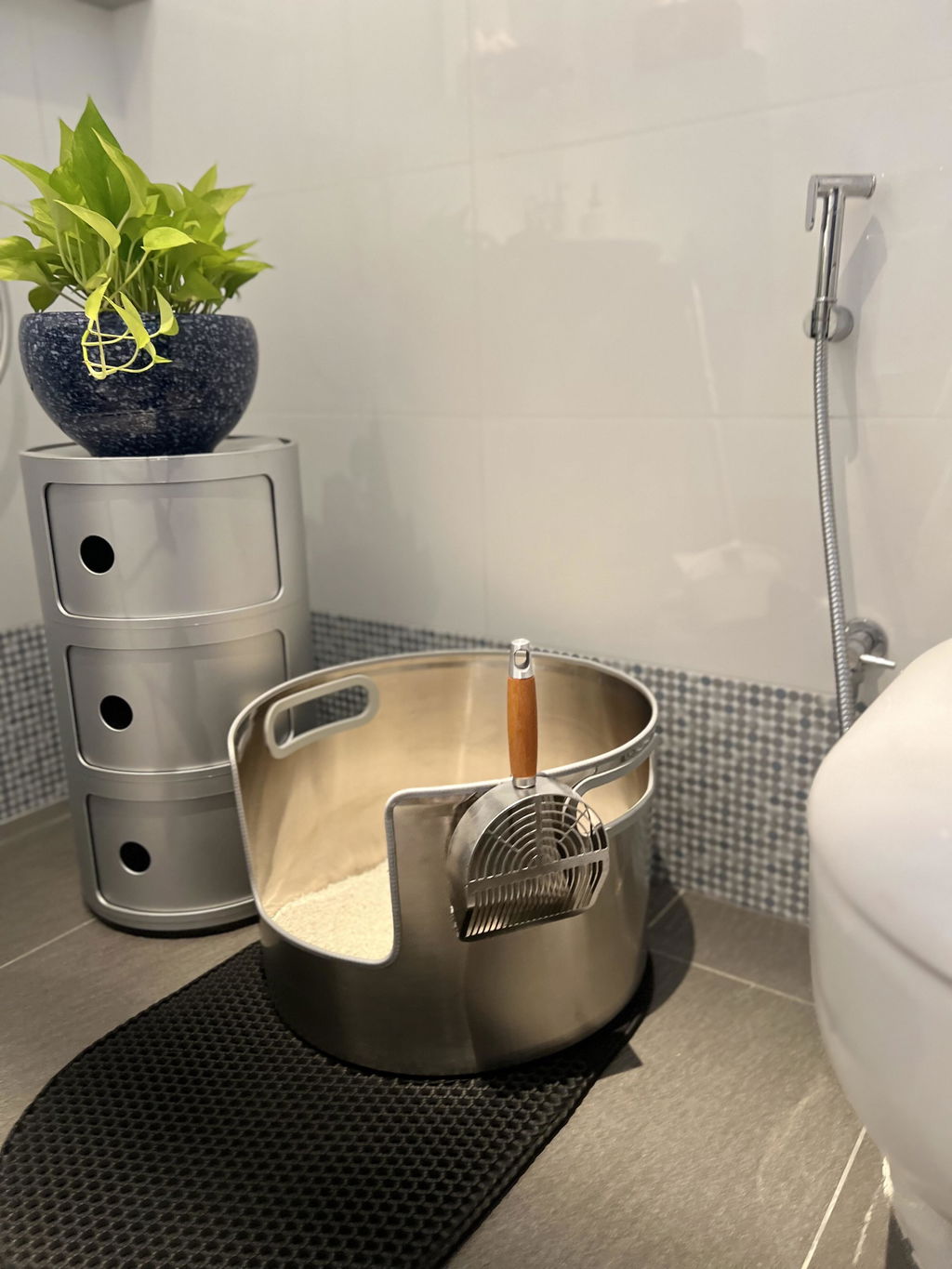
Wood pellets break into sawdust when wet. A purpose-designed sieve litter box lets dry pellets stay above while spent sawdust falls through. Some cats dislike the larger pellet texture, so transition gradually.
Crystal or silica litter
Crystal litter absorbs moisture and is lightweight. It can last longer between full changes in some households, but solids still need daily removal and crystals still need monitoring. The texture and sound are not accepted by every cat.
How to change litter without creating accidents
- Keep the familiar tray in place.
- Offer the new litter in a second clean box.
- Use the same location and similar litter depth.
- Avoid adding perfume or deodoriser.
- Observe preference over several days.
- If your cat refuses the new substrate, return to the accepted option.
Choose around the cat and the box
A standard tray suits clumping and non-clumping litters; a sieve changes the workflow for pellets or compatible clumping litter. Large cats need more floor area regardless of litter type. Senior cats may need a lower entry even when their preferred litter stays the same.
Frequently asked questions
Which cat litter controls odour best?
No material wins in every home. Rapid waste removal, enough clean litter, good ventilation and a washable box matter alongside the litter formula.
Can cat litter be composted?
Follow the manufacturer and your local council. Cat waste can carry pathogens, and many compost systems are not suitable for it. Never use cat-waste compost on food crops.
Cats with respiratory disease, wounds, recent surgery or repeated litter-box avoidance need individual veterinary advice.